|
$$PLAIN_TEXT_PREVIEW$$
News Monitor #32
6 August 2026Le bulletin dans son intégralité en français est disponible sous la version anglaise.
|
|
If you were forwarded this email, you can subscribe here. // Si ce mail vous a été transféré, vous pouvez vous abonner ici.
|
HIGHLIGHTSOn July 28th, the Constitutional Court approved the referendum law, leaving only promulgation before it comes into force, clearing a major hurdle for President Tshisekedi in his bid for a third term. The ruling came ten days after he announced a national dialogue (see PAEMA's statement). However, three weeks on, no ordinance has been issued and the dialogue's scope and participants remain undefined, meanwhile the C64 opposition coalition is threatening to resume its mobilization on August 15th. Both the Washington and Doha peace processes slipped backwards. On July 28th, Kinshasa announced that the FDLR had signed a disarmament protocol, which Kigali outright rejected the same day. In Goma, M23 expelled a FARDC officer from the newly-formed ceasefire verification mechanism (see Monitor #31), compromising the little progress that had been made. The Ebola epidemic has become the highest ever recorded in the DRC, as infection rates continue to grow across five provinces. The latest WHO update, dated July 30th, reports a total of 3,626 cases and 1589 deaths. A preliminary study was published and estimated that the pandemic, though officially declared on May 15th, likely started as early as January 2026. The International Rescue Committee (IRC) flags that the case fatality rate for the disease is significantly higher in North Kivu’s ‘Grand Nord’ region, rising as high as 68% in Beni, than in Ituri province and the rest of North Kivu. The response remains hampered by community mistrust and attacks towards medical teams and treatment centers and the non-payment of wages to responders.
|
CONSTITUTIONAL REFORM AND THE NATIONAL DIALOGUEOn July 28th, the Constitutional Court approved the referendum law that would pave the way to a removal or resetting of presidential term limits, allowing President Tshisekedi to serve a third term. The Constitutional court decision came 10 days after President Tshisekedi announced he would convene a ‘national dialogue’, in a bid to stem the opposition’s mobilization, and the C64 opposition coalition agreed (read PAEMA’s statement), giving Tshisekedi until August 15th to convene consultations. The government rejected the deadline, stating that the ‘President’s agenda does not respond to ultimatums’. The opposition, coalesced under the C64 umbrella, decried the Constitutional Court’s approval, saying it constituted a ‘high treason’, and reiterated its call to resume mobilizations on August 15th if Tshisekedi has not yet convened the national dialogue. After Burundian president Evariste Ndayishimiye, others are attempting to forge themselves a position as mediators in the crisis. Among them are Congo-Brazzaville president Denis Sassou-Nguesso, concerned with his neighbor’s stability, who is said to have also brought in former Guinean president Alpha Condé behind the scenes. Though nearly three weeks have passed since the announcement of the national dialogue, little progress has been visible, and key variables such as the scope and the participants remain unknown. Citizen activism movement LUCHA issued a communiqué welcoming the dialogue but demanding tangible steps to ensure its credibility and efficacy, including the liberation of all political prisoners, the respect of the Constitution, the inclusivity of the dialogue (including opposition, civil society, and armed groups), and the creation of an independent monitoring mechanism for the resolutions that would come out of it. Wazalendo militants also demanded to be included in the national dialogue. In M23-held, Goma and Bukavu, the provincial capitals of North and South Kivu respectively, ‘tens of thousands’ of people participated in protests on July 28th, rejecting constitutional change and denouncing UN sanctions on AFC/M23 leaders (see Monitor #31). Civil society said M23 staged the protests and coerced residents into participating.
|
PEACE PROCESSESOn July 28th, Congolese Regional Integration Minister Floribert Anzuluni announced that FDLR had signed a disarmament protocol, covering demilitarization, demobilization, cantonment, in a first phase and leading to an eventual dissolution in a second phase. Anzuluni also said that Kinshasa had deployed two battalions in Walikale (North Kivu) to ‘neutralize’ the group. Kigali, which has made the neutralization of FDLR the prerequisite for its withdrawal from DRC, immediately reacted by rejecting the protocol, saying that FDLR were not party to the Washington Accords, and that it was an attempt by the DRC to circumvent its security obligations. The completion of the ceasefire verification mechanism, a requirement of the Doha process, was announced in mid-July,(see Monitor #31), with the arrival of three FARDC officers in M23-held Goma. But on July 31st, Defence Minister Guy Kabombo said that one of the officers had been expelled by M23, jeopardizing the progress made. Representatives from the Southern Africa Development Community (SADC) and the African Union met in Gaborone (Botswana) from July 24th-26th to discuss ways to reinforce regional mediation efforts in the Congolese crisis.
|
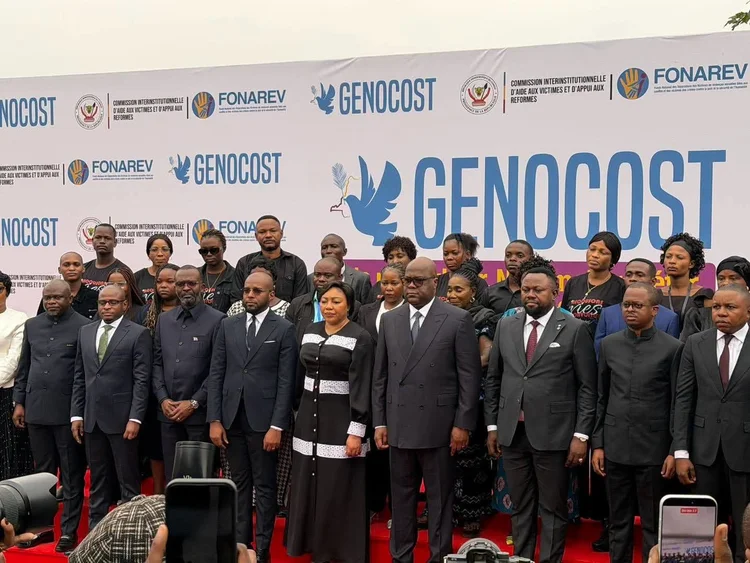
CONGOLESE DIPLOMACYThe DRC officially handed over the United Nations Security Council presidency to Denmark, after a month marked by an emphasis put on the governance of natural resources and conflict, and widely read as successful in building political capital for Kinshasa in Turtle Bay. On August 2nd, for the third year, the DRC officially commemorated the ‘Genocost’ (genocide for economic gains), a day meant to memorialize the victims of the First and Second Congo Wars and subsequent conflict in the east. President Tshisekedi presided over an official ceremony in Kinshasa at the Genocost memorial, and announced initiatives (including the creation of a national museum and the introduction of a budget line for reparations starting next financial year) that make it clear his government is attempting to make the Genocost a key political tool in Congolese politics and diplomacy, in addition to seeking legal recognition. Events were held at Congolese embassies around the world, including in Cairo, Paris, Gaborone and Port-Sudan. Civil society also organized events in Burundi, Paris and London. From July 27th-30th, Foreign Minister Thérèse Kayikwamba was on a state visit to Israel, where she met with President Isaac Herzog, partook in a roundtable with the Israeli Export Institute to promote investments in the DRC, and paid her respects at the October 7th memorial. A Financial Times piece published on August 5th highlights the lobbying firms hired by African governments, including Kinshasa, to bolster their cause to the Trump administration and to the President himself.
|
ARMED CONFLICTIturi From July 24th to July 29th, Allied Democratic Forces (ADF) rebels continued their assault on civilians in Mambasa territory’s Babila-Babombi chiefdom, killing nearly 40 people in ten days and abducting dozens. In Djugu territory, ex-ICC convict Thomas Lubanga’s CRP militia seized Lenga, the seat of Bahema-Badjere chiefdom, on July 27th. On August 3rd, CRP targeted FARDC positions near Rhoo, accusing the soldiers of harassing the farmers coming from the town’s IDP camp. Three CRP combatants were killed.
North Kivu In Lubero territory, two Wazalendo factions clashed over control of the Tetuna gold mining site (Batangi chiefdom) on July 28th. M23 and the Wazalendo coalition clashed from July 24th to 26th in the southern area of Masisi territory. On July 28th, two FARDC drone strikes targeted M23 senior commanders in Nyabiondo, killing 5. Clashes resumed on August 1st. Though the frontlines remained quiet in Walikale, M23 reinforcements on July 23rd led to fears of new offensives towards Mpeti and Minjenje; some clashes were reported on August 3rd. Civil society raised the alarm on the treatment of prisoners by M23 in Rutshuru territory, saying that 700 people, mainly youths, were released from the group’s detention on August 3rd, and many of them showed signs of torture. Former detainees said nearly 10 people died each day due to the conditions within the jail.
South Kivu Beyond the east Haut-Lomami: On July 28th, a militia coming from Upemba National Park attacked FARDC in Bukama town, the capital of Bukama territory, the eve of a scheduled visit by President Tshisekedi in the province. One militant and a civilian were killed in the clash, but motivations behind the attack remain unclear. Haut-Katanga: On August 2nd, a Mayi Mayi group attacked an army position in Mitwaba territory, killing 10, including 8 civilians (FARDC dependents). 15 suspected members of the Bakata Katanga, a secessionist militia, were arrested the following day.
|
DISPLACEMENT AND HUMANITARIANThe Ebola epidemic has become the highest ever recorded in the DRC, as infection rates continue to grow across five provinces. The latest WHO update, dated July 30th, reports a total of 3,626 cases and 1589 deaths. A preliminary study was published and estimated that the pandemic, though officially declared on May 15th, likely started as early as January 2026. The International Rescue Committee (IRC) flags that the case fatality rate for the disease is significantly higher in North Kivu’s ‘Grand Nord’ region, rising as high as 68% in Beni, than in Ituri province and the rest of North Kivu. The response remains hampered by community mistrust and attacks towards medical teams and treatment centers and the non-payment of wages to responders. On July 29th, Kigali expelled 39 people back to the DRC, that had previously been repatriated to Rwanda as part of MONUSCO’s DDRRR (Disarmament, Demobilization, Repatriation, Reintegration and Reinstallation) program. Kigali said the persons had pretended to be former FDLR fighters but were actually Congolese civilians, and accused MONUSCO of not having done its due diligence. Some sources report that the civilians said they have been coerced into pretending they were former FDLR members in exchange for remuneration. The World Food Programme warned that it might suspend food assistance to 150,000 Congolese refugees in Burundi as soon as September due to a lack of funding.
|
ANALYSIS, REPORTING AND INVESTIGATIONSA reporting piece by Finbarr O’Reilly for the New York Times in IDP camps in Ituri province exposes the struggles that Congolese living in the camps face in preventing and responding to Ebola, as lack of water and other resources make containment and sanitation near-impossible. A Lighthouse Reports investigation (co-published with the Financial Times and Nature) found that undeclared uranium (the export of which is prohibited by Congolese law) was exported to China within cobalt shipments. A Norwegian Refugee Council briefing argues that land tenure security is a key tenet for peace and security in eastern DRC, urging policymakers and humanitarians to integrate the land dimension in their interventions.
|
|
If there is anything specifically you would like to see from this newsletter or if you have any feedback, we would love to hear from you. Please write to us at drcnews@paema.ngo or leave a comment through this anonymous form.
|
En brefLe 28 juillet, la Cour constitutionnelle a validé la loi référendaire, qui n’attend plus que sa promulgation
pour entrer en vigueur, levant un obstacle majeur pour le président Tshisekedi
dans sa quête d’un troisième mandat. L’arrêt intervient dix jours après son annonce d’un dialogue national
(voir la déclaration de PAEMA). Trois semaines plus tard, aucune
ordonnance n’a toutefois été prise et le format, le périmètre et les
participants du dialogue restent indéfinis, tandis que la coalition
d’opposition C64 menace de reprendre sa mobilisation le 15 août. Les processus de paix de Washington et de Doha ont tous deux reculé. Le 28 juillet, Kinshasa a annoncé la signature par les FDLR d’un protocole de désarmement, que Kigali a rejeté le jour même en surenchérissant sur ses exigences. À Goma, le M23 a expulsé un officier des FARDC du mécanisme de vérification du cessez-le-feu tout juste mis en place (voir le Monitor #31), compromettant le peu de progrès accomplis. L'épidémie d'Ebola est devenue la plus importante jamais enregistrée en RDC, alors que les taux d'infection continuent d'augmenter dans cinq provinces. La dernière mise à jour de l’OMS, datée du 30 juillet, fait état de 3 626 cas et 1 589 décès. Une étude préliminaire estime que l’épidémie, officiellement déclarée le 15 mai, aurait débuté dès janvier 2026. L’International Rescue Committee (IRC) relève que la létalité de la maladie est nettement plus élevée dans le « Grand Nord » du Nord-Kivu — jusqu’à 68 % à Beni — qu’en Ituri et dans le reste du Nord-Kivu. La riposte reste entravée par la méfiance communautaire et les attaques contre les équipes soignantes et les centres de traitement, ainsi que par le non-paiement des primes des agents de la riposte.
|
RÉVISION
CONSTITUTIONNELLE ET DIALOGUE NATIONALLe 28 juillet, la Cour constitutionnelle a validé la loi référendaire qui
ouvrirait la voie à la suppression ou à la remise à zéro de la limitation des
mandats présidentiels, permettant au président Tshisekedi de briguer un
troisième mandat. La décision de la Cour intervient dix jours après l’annonce par le président Tshisekedi de la convocation d’un « dialogue national », destiné à endiguer la mobilisation de l’opposition. La coalition d’opposition C64 y a souscrit (lire la déclaration de PAEMA) tout en donnant à Tshisekedi jusqu’au 15 août pour convoquer les consultations. Le gouvernement a rejeté cet ultimatum, estimant que « l’agenda du Président ne répond pas aux ultimatums ». L’opposition réunie au sein de la C64 a dénoncé l’arrêt de la Cour constitutionnelle, y voyant une « haute trahison », et a réitéré son appel à reprendre les mobilisations le 15 août si le dialogue national n’a pas été convoqué d’ici là. Après le président burundais Évariste Ndayishimiye, d’autres cherchent à se poser en médiateurs de la crise. Parmi eux, le président de la République du Congo Denis Sassou-Nguesso, soucieux de la stabilité de son voisin, qui aurait également associé en coulisses l’ancien président guinéen Alpha Condé. Près de trois semaines après l’annonce du dialogue national, peu d’avancées sont visibles et des variables clés — périmètre, participants — demeurent inconnues. Le mouvement citoyen LUCHA a publié un communiqué saluant le principe du dialogue tout en exigeant des gages de crédibilité et d’efficacité : libération de tous les prisonniers politiques, respect de la Constitution, inclusivité (opposition, société civile et groupes armés) et création d’un mécanisme indépendant de suivi des résolutions. Des combattants Wazalendo ont eux aussi demandé à y être associés. À Goma et Bukavu, chefs-lieux du Nord-Kivu et du Sud-Kivu occupés par le M23, « des dizaines de milliers » de personnes ont participé à des manifestations le 28 juillet, rejetant la révision constitutionnelle et dénonçant les sanctions onusiennes visant les dirigeants de l’AFC/M23 (voir le Monitor #31). Selon la société civile, ces manifestations ont été orchestrées par le M23, qui aurait contraint les habitants à y participer.
|
PROCESSUS DE PAIXLe 28 juillet, le ministre congolais de l’Intégration régionale Floribert Anzuluni a annoncé que les FDLR avaient signé un protocole de désarmement,
prévoyant démilitarisation, démobilisation et cantonnement dans une première
phase, puis une dissolution dans une seconde. Anzuluni a également indiqué que
Kinshasa avait déployé deux bataillons à Walikale (Nord-Kivu) pour « neutraliser » le
groupe. Kigali, qui fait de la neutralisation des FDLR le préalable à son
retrait de RDC, a immédiatement rejeté le protocole, arguant que les FDLR ne sont pas partie
aux accords de Washington et qu’il s’agit d’une tentative de Kinshasa de
contourner ses obligations sécuritaires. La création du mécanisme de vérification du cessez-le-feu, exigé par le processus de Doha, avait été finalisée été à la mi-juillet (voir le Monitor #31), avec l'arrivée de trois officiers des FARDC à Goma, ville occupée par le M23. Mais le 31 juillet, le ministre de la Défense Guy Kabombo a déclaré que l'un de ces officiers avait été expulsé par le M23, fragilisant les avancées obtenues. Des représentants de la Communauté de développement d’Afrique australe (SADC) et de l’Union africaine se sont réunis à Gaborone (Botswana) du 24 au 26 juillet pour examiner les moyens de renforcer les efforts de médiation régionale dans la crise congolaise.
|
DIPLOMATIE CONGOLAISELa RDC a officiellement remis la présidence du Conseil de sécurité des Nations unies au Danemark, au terme d’un mois marqué par l’accent mis sur la gouvernance des ressources naturelles et les conflits, et largement jugé réussi du point de vue du capital politique
engrangé par Kinshasa à Turtle Bay. Le 2 août, pour la troisième année, la RDC a commémoré le « Genocost » (génocide à des fins économiques), journée dédiée à la mémoire des victimes des première et deuxième guerres du Congo et des conflits qui ont suivi dans l’Est. Le président Tshisekedi a présidé une cérémonie officielle à Kinshasa au mémorial du Genocost et a annoncé plusieurs initiatives — création d’un musée national, inscription d’une ligne budgétaire pour les réparations dès le prochain exercice — qui montrent que son gouvernement entend faire du Genocost un instrument politique et diplomatique central, en plus d’en rechercher la reconnaissance juridique. Des événements ont été organisés dans les ambassades congolaises à travers le monde, notamment au Caire, à Paris, à Gaborone et à Port-Soudan. La société civile a également tenu des commémorations au Burundi et à Londres. Du 27 au 30 juillet, la ministre des Affaires étrangères Thérèse Kayikwamba était en visite officielle en Israël, où elle a rencontré le président Isaac Herzog, participé à une table ronde avec l’Israeli Export Institute pour promouvoir les investissements en RDC, et rendu hommage aux victimes du 7 octobre. Un article du Financial Times publié le 5 août revient sur les cabinets de lobbying recrutés par des gouvernements africains, dont Kinshasa, pour défendre leur cause auprès de l’administration Trump et du président lui-même.
|
CONFLITS ARMÉSIturi Du 24
au 29 juillet, les rebelles des Forces démocratiques alliées (ADF) ont
poursuivi leurs attaques contre les civils dans la chefferie des
Babila-Babombi, en territoire de Mambasa, tuant près de 40 personnes en dix jours et enlevant des dizaines d’autres. En territoire de Djugu, la milice CRP de Thomas Lubanga, ancien condamné de la CPI, s’est emparée de Lenga, siège de la chefferie des Bahema-Badjere, le 27 juillet. Le 3 août, le CRP a attaqué des positions des FARDC près de Rhoo, accusant les militaires de harceler les cultivateurs venus du camp de déplacés. Trois combattants du CRP ont été tués.
Nord-Kivu En territoire
de Lubero, deux factions Wazalendo se sont affrontées pour le contrôle du carré
minier aurifère de Tetuna (chefferie des Batangi) le 28 juillet. Le M23 et la coalition Wazalendo se sont affrontés du 24 au 26 juillet dans le sud du territoire de Masisi. Le 28 juillet, deux frappes de drone des FARDC ont visé des commandants du M23 à Nyabiondo, tuant cinq personnes. Les combats ont repris le 1er août. Si les lignes de front sont restées calmes à Walikale, l’arrivée de renforts du M23 le 23 juillet a fait craindre de nouvelles offensives vers Mpeti et Minjenje ; des affrontements ont été signalés le 3 août. La société civile a alerté sur le traitement des détenus par le M23 en territoire de Rutshuru : 700 personnes, majoritairement des jeunes, ont été libérées des geôles du groupe le 3 août, dont beaucoup portaient des traces de torture. D’anciens détenus affirment que près de dix personnes mouraient chaque jour du fait des conditions de détention.
Sud-Kivu Au-delà de l’est Haut-Lomami : le 28 juillet, des miliciens venus du
parc national de l’Upemba ont attaqué les FARDC à Bukama, chef-lieu du
territoire du même nom, à la veille d’une visite du président Tshisekedi dans
la province. Un milicien et un civil ont été tués ; les motivations de
l’attaque restent floues. Haut-Katanga : le 2 août, un groupe Maï-Maï a attaqué une position de l’armée en territoire de Mitwaba, tuant dix personnes, dont huit civils (dépendants de militaires). Quinze présumés membres des Bakata Katanga, milice sécessionniste, ont été arrêtés le lendemain.
|
DEPLACEMENTS FORCES ET SITUATION HUMANITAIREL'épidémie d'Ebola est devenue la plus importante jamais enregistrée en RDC, alors que les taux d'infection continuent d'augmenter dans cinq provinces. La dernière mise à jour de l’OMS, datée du 30 juillet, fait état de 3 626 cas et 1 589 décès. Une étude préliminaire estime que l’épidémie, officiellement déclarée le
15 mai, aurait débuté dès janvier 2026. L’International Rescue Committee (IRC)
relève que la létalité de la maladie est nettement plus
élevée dans le «
Grand Nord » du Nord-Kivu — jusqu’à 68 % à Beni — qu’en Ituri et dans le reste
du Nord-Kivu. La riposte reste entravée par la méfiance communautaire et les attaques
contre les équipes soignantes et les centres de traitement, ainsi que par le non-paiement des primes des agents de la
riposte. Le 29 juillet, Kigali a renvoyé 39 personnes vers la RDC, précédemment rapatriées au Rwanda dans le cadre du programme DDRRR (désarmement, démobilisation, rapatriement, réintégration et réinstallation) de la MONUSCO. Kigali affirme que ces personnes se sont fait passer pour d’anciens combattants FDLR alors qu’il s’agissait de civils congolais, et accuse la MONUSCO de ne pas avoir procédé aux vérifications nécessaires. Selon certaines sources, ces civils affirment avoir été recrutés pour se faire passer pour des FDLR en échange d’une rémunération. Le Programme alimentaire mondial a averti qu’il pourrait suspendre dès septembre l’aide alimentaire à 150 000 réfugiés congolais au Burundi, faute de financement.
|
ANALYSES, ENQUÊTES, REPORTAGESUn reportage de Finbarr O’Reilly pour le New York Times dans les camps de déplacés de l’Ituri
documente les difficultés des Congolais qui y vivent à prévenir Ebola et à y
répondre, le manque d’eau et de moyens rendant le confinement et l’hygiène
quasi impossibles. Une enquête de Lighthouse Reports (copubliée avec le Financial Times et Nature) révèle que de l’uranium non déclaré — dont l’exportation est interdite par la loi congolaise — a été exporté vers la Chine dans des cargaisons de cobalt. Une note du Conseil norvégien pour les réfugiés (NRC) soutient que la sécurisation foncière est un pilier de la paix et de la sécurité dans l’est de la RDC, et invite décideurs et humanitaires à intégrer la dimension foncière dans leurs interventions.
|
|
Si vous avez des suggestions, commentaires ou questions, nous serions ravi.e.s de les recevoir. Vous pouvez nous écrire à drcnews@paema.ngo ou nous laisser un commentaire sur ce formulaire anonyme.
|
|
|
|