|
Myanmar News Monitor #14 ͏ ͏ ͏ ͏ ͏ ͏ ͏ ͏ ͏ ͏ ͏ ͏ ͏ ͏ ͏ ͏ ͏ ͏ ͏ ͏ ͏ ͏ ͏ ͏ ͏ ͏ ͏ ͏ ͏ ͏ ͏ ͏ ͏ ͏ ͏ ͏ ͏ ͏ ͏ ͏ ͏ ͏ ͏ ͏ ͏ ͏ ͏ ͏ ͏ ͏ ͏ ͏ ͏ ͏ ͏ ͏ ͏ ͏ ͏ ͏ ͏ ͏ ͏ ͏ ͏ ͏ ͏ ͏ ͏ ͏ ͏ ͏ ͏ ͏ ͏ ͏ ͏ ͏ ͏ ͏ ͏ ͏ ͏ ͏ ͏ ͏ ͏ ͏ ͏ ͏ ͏ ͏ ͏ ͏ ͏ ͏ ͏ ͏ ͏ ͏ ͏ ͏ ͏ ͏ ͏ ͏ ͏ ͏ ͏ ͏ ͏ ͏ ͏ ͏ ͏ ͏ ͏ ͏ ͏ ͏ ͏ ͏ ͏ ͏ ͏ ͏ ͏ ͏ ͏ ͏ ͏ ͏ ͏ ͏ ͏ ͏ ͏ ͏ ͏ ͏ ͏ ͏ ͏ ͏ ͏ ͏ ͏ ͏ ͏ ͏ ͏ ͏ ͏ ͏ ͏ ͏ ͏ ͏ ͏ ͏ ͏ ͏ ͏ ͏ ͏ ͏ ͏ ͏ ͏ ͏ ͏ ͏ ͏ ͏ ͏ ͏ ͏ ͏ ͏ ͏ ͏ ͏ ͏ ͏ ͏ ͏ ͏ ͏ ͏ ͏ ͏ ͏ ͏ ͏ ͏ ͏ ͏ ͏ ͏ ͏ ͏ ͏ ͏ ͏ ͏ ͏ ͏ ͏ ͏ ͏ ͏ ͏ ͏ ͏ ͏ ͏ ͏ ͏ ͏ ͏ ͏ ͏ ͏ ͏ ͏ ͏ ͏ ͏ ͏ ͏ ͏ ͏ ͏ ͏ ͏ ͏ ͏ ͏ ͏ ͏ ͏ ͏ ͏ ͏ ͏ ͏ ͏ ͏ ͏ ͏ ͏ ͏ ͏ ͏ ͏
News Monitor #14
AUGUST 2026
|
|
If you were forwarded this email, you can subscribe here.
|
PAEMA UpdatesPAEMA has recently launched the Sudan News Monitor and is continuing to publish the DRC News Monitor. If you enjoy the Myanmar News Monitor and would like to receive timely and reliable updates of political and security developments regarding Sudan and DRC, or know anyone who would, please consider subscribing and sharing. On October 3rd, PAEMA will be hosting a fundraiser in Portland, Oregon. Join us for an evening to celebrate and support conflict-affected communities as we work towards a future without genocide and mass atrocities. If you are unable to attend, you can help sustain our work by making a donation.
|
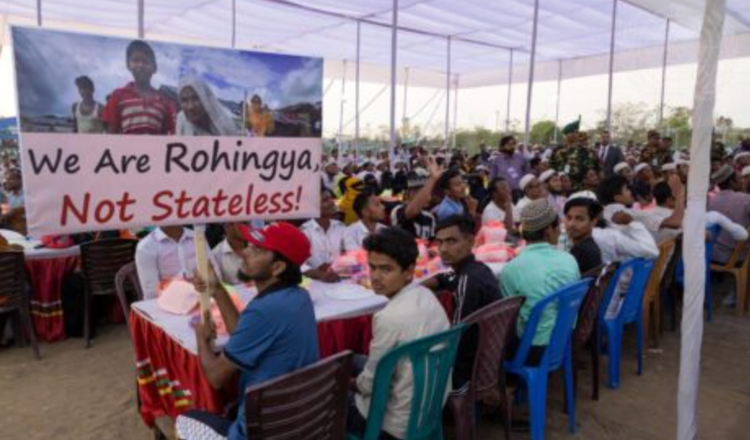
NEWS ROUNDUPThe junta continued regaining territory previously held by resistance groups, focusing on key trade corridors and cutting off supply routes. Mandatory conscription, increased support from China, airpower, and advances in drone technology have all helped strengthen the junta. With no resolution to the Rohingya crisis in sight, refugees in Bangladesh gathered on August 25 to mark Genocide Day, the anniversary of the 2017 military campaign that drove more than 700,000 people from their homes in Rakhine State. The International Committee for the Red Cross visited Former State Counsellor Aung San Suu Kyi, establishing proof of life after months of pressure and speculation.
|
ARMED CONFLICTChin State: The leader of the Chin National Organization/Chin National Defence Force (CNO/CNDF) was deposed after he engaged in secret talks with the junta. In an effort to regain control of India–Myanmar border trade, the junta sent reinforcements to Tedim and Falam. A junta airstrike in Paletwa killed five civilians on August 25, and another in Mindat killed eight civilians on August 31. Mon State: Civilians protested against junta security orders, citing extortion and forced conscription. Young civilians migrated in mass to avoid forced conscription; others were detained and forced to pay exorbitant ransoms. Kachin State: The Kachin Independence Army (KIA) intercepted a junta offensive near the Kachin-Sagaing border, and junta airstrikes targeted towns affected by severe flooding. Heavy fighting continued across at least five townships. Kayin/Karen State: The junta suffered heavy casualties while fighting the Karen National Liberation Army (KNLA), and withdrew from positions around Myawaddy Township, with over 2,000 displaced people trapped near the Thai border. The junta launched an offensive to retake a strategic village in Kawkareik Township from the KNLA. Kayah/Karenni State: A junta airstrike on August 6 in Demoso Township killed a civilian and destroyed a local school. The resistance-aligned Karenni Interim Executive Council declared landmine clearance an urgent necessity. Rakhine State: Civilian casualties mounted as junta airstrikes escalated across the region despite the lack of ground combat success. Strikes in Thandwe Township on August 10 marked the eleventh mass casualty incident perpetrated in Rakhine by the junta in 2026. The AA attacked and severely damaged at least three junta bases along the Ann-Magwe road. Shan State: The junta set up checkpoints to extort citizens along a local highway. A KIA-led coalition intercepted junta forces in Mongmit Township, and junta airstrikes from August 3 to 6 targeted civilians and medical infrastructure in flood-affected Mabian Township. The junta forcibly displaced thousands of villagers in Ywangan Township. The TNLA deployed troops in northern villages, citing anti-drug operations but raising safety concerns among residents. The junta and resistance group Restoration Council of Shan State (RCSS) were both reported to forcibly conscript drug users. Ayeyarwady Division: The junta suffered heavy casualties while fighting the AA, which said it had blocked regime attempts to enter Rakhine State and seized several bases during the clashes. Bago Division: Three civilians were killed in a junta airstrike in Ler Doh Township. Magway Division: A Myanmar junta column killed 33 civilians in an ongoing offensive to retake the strategic Myaing oil field, under resistance control since 2022. The three-month operation has included the burning of over 370 homes and displaced tens of thousands. The junta sustained heavy losses during combat with AA forces, but amassed hundreds of troops during the last week of August in preparation for a renewed ground offensive in Rakhine. Mandalay Division: Heavy ground offensives were launched to clear the way for a junta flotilla headed for Shwegu in Kachin State, which was attacked by resistance forces on August 26. Sagaing Division: The junta reasserted control over territories on the Tamu-Kalay road, and actively blocked relief from reaching victims of severe flooding. On August 21, a junta airstrike on a Buddhist monastery killed at least 14 civilians, and a series of airstrikes hit Pinlebu Township on August 16 and 17. Tanintharyi Division: The junta deployed hundreds of troops to protect the Russia-backed Dawei Special Economic Zone and port under construction. The junta abducted civilians to use as human shields amid a major new riverine offensive. A new report by Fortify Rights details deepening Russia-junta ties.
|
HUMANITARIAN, ECONOMIC & SOCIAL CONDITIONSA health crisis gripped Yangon, with an acute diarrhea outbreak causing over 500 hospitalizations as of August 14, with nearly 200 cases of cholera confirmed. The junta cracked down on trade along the Thai-Myanmar border, affecting vital supply chains of food and consumer goods entering resistance-controlled areas. Townships across upper Myanmar were affected by severe flooding, including Sagaing, Mandalay, Magway, and Ayeyarwady, prompting concerns about long-term damage to agriculture. The floods also damaged roads linking Kachin State and Mandalay. A ferry capsized in Saigang on August 1, leaving 51 dead and 70 missing. The youth are becoming increasingly harder to save at Kutupalong hospital in Cox’s Bazar.
|
INTERNATIONAL AND REGIONAL AND
DIPLOMACYOn August 20, the U.S. Department of State declared the imprisonment of Min Zin, a Burmese-American scholar currently imprisoned in China, as a case of wrongful detention.
The International Committee for the Red Cross visited deposed leader Aung San Suu Kyi on August 3, providing photos to establish proof of life. The U.S. and ASEAN reiterated their calls for her unconditional release.
The termination of Temporary Protected Status for Burmese living in the U.S. became effective on August 7, ending the legal protection for nearly 4,000 Burmese nationals and clearing the way for their deportation.
On August 6, Min Aung Hlaing made his first diplomatic visit to Thailand since assuming the presidency. Thai Prime Minister Charnvirakul later called for "calibrated re-engagement" of ASEAN’s policy of excluding Myanmar’s leadership.
The junta also called on Thailand to block channels for weapons and equipment reaching resistance groups; Prime Minister Charnvirakul agreed and ordered tighter border controls.
On August 20, Min Aung Hlaing and the junta-appointed minister of Tanintharyi Division met with President Putin in Russia to strengthen ties and sign cooperative agreements on space and satellite technology, oil, gas, and electricity.
|
DOMESTIC POLITICS AND DIALOGUEThe United Wa State Party (UWSP) and the junta initiated negotiations on political issues, security, regional development, and peace talks beyond the existing informal ceasefire in place for decades. A coalition of Karen community groups formed the Karen Worldwide Advocacy Network (KWAN), petitioning against foreign governments funding the junta. On August 14, two Bamar resistance groups agreed to join the Steering Council for the Emergence of a Federal Democratic Union (SCEF), a growing anti-junta coalition that unites the National Unity Government (NUG) with ethnic armed organizations. The National Solidarity and Peacemaking Negotiation Committee (NSPNC) and the Shan State Progress Party (SSPP) held their second round of peace talks on August 7, discussing stability, political solutions, and combatting online scams and illegal gambling rings. New Delhi considered a small territorial exchange with Myanmar in Nagaland to settle a longstanding border disagreement.
|
ENVIRONMENT AND NATURAL RESOURCESRice yields in Mon State are expected to decrease significantly due to erratic weather, rising labor costs, and transportation issues related to conflict. Civilians are protesting gold mining on farmland in the Putao district. An analysis in Foreign Policy argues that for critical mineral mining in Myanmar to be sustainable, negative environmental issues, social conditions, and conflict impacts at the extraction end of supply chains must be addressed while still allowing mineral supply to flow.
|
REPORTING AND ANALYSISThe UN human rights office stated that the human rights situation in Myanmar had reached a “new low,” with illicit mining and scam center proliferation compounding conflict and existing crises. According to a new ACLED analysis, fighting is set to intensify in central Myanmar this year, including dense population centers. An Al Jazeera analysis summarizes the factors enabling the junta to retake lost territories in recent months: higher troop numbers following a 2024 mandatory conscription policy, unmatched air power and drone technology, and support from China. Meanwhile, resistance forces’ struggle to obtain bullets, arms and other supplies. An op-ed in the Middle East Forum Observer argues that Iran’s support of the military junta may threaten India’s border security. According to the Independent Investigative Mechanism for Myanmar (IIMM), the junta adopted "double-tap" airstrike tactics in 2026, returning to bomb strike sites within minutes to target rescue workers. Rohingya human rights activist Lucky Karim argued that the international community is treating the symptoms of the Rohingya crisis rather than addressing the underlying issues and that sustainable solutions require an inclusive political process.
|
|
If there is anything specifically you would like to see from this newsletter or if you have any feedback, we would love to hear from you. Please write to us at info@paema.ngo
|
|
|
|